

Amino Acids Are Absorbed Via
5.4: Protein Digestion, Absorption and Metabolism
- Page ID
- 1869
Skills to Develop
-
Discuss how proteins are digested and absorbed past our bodies.
How exercise the proteins from foods, denatured or not, become processed into amino acids that cells can use to brand new proteins? When you lot swallow food the body's digestive system breaks downward the protein into the individual amino acids, which are absorbed and used by cells to build other proteins and a few other macromolecules, such as DNA. Let'due south follow the specific path that proteins have down the gastrointestinal tract and into the circulatory system. Eggs are a practiced dietary source of poly peptide and will be used as our example to describe the path of proteins in the processes of digestion and assimilation. One egg, whether raw, hard-boiled, scrambled, or fried, supplies about half-dozen grams of protein.
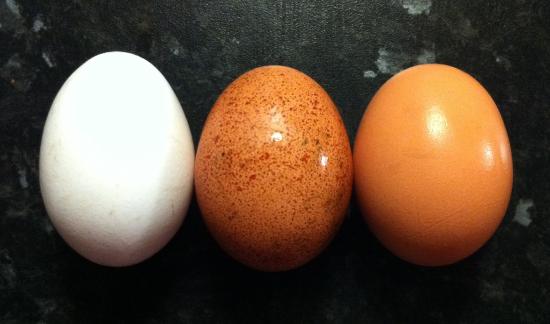
Effigy 5.iv.i: The egg is a good dietary source of protein. White, speckled (red), and brown chicken eggs. (CC-SA-Past 3.0; Timothy Titus)
From the Mouth to the Stomach
Unless you are eating it raw, the first step in egg digestion (or any other poly peptide nutrient) involves chewing. The teeth begin the mechanical breakdown of the large egg pieces into smaller pieces that can be swallowed. The salivary glands provide some saliva to aid swallowing and the passage of the partially mashed egg through the esophagus. The mashed egg pieces enter the stomach through the esophageal sphincter. The stomach releases gastric juices containing hydrochloric acid and the enzyme, pepsin, which initiate the breakdown of the protein. The acidity of the stomach facilitates the unfolding of the proteins that still retain office of their three-dimensional construction after cooking and helps break down the protein aggregates formed during cooking. Pepsin, which is secreted by the cells that line the breadbasket, dismantles the protein chains into smaller and smaller fragments. Egg proteins are large globular molecules and their chemical breakdown requires time and mixing. The powerful mechanical tummy contractions churn the partially digested protein into a more uniform mixture called chyme. Protein digestion in the stomach takes a longer time than carbohydrate digestion, but a shorter time than fat digestion. Eating a high-protein meal increases the corporeality of time required to sufficiently break down the repast in the tummy. Food remains in the stomach longer, making yous feel full longer.
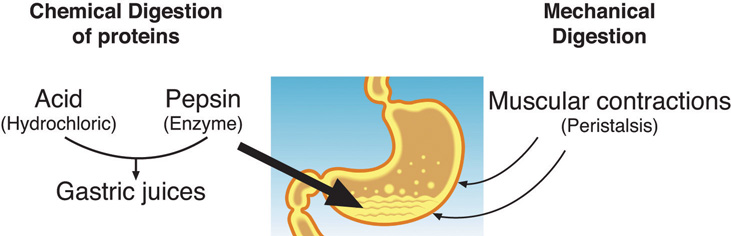
Figure 5.4.2: Protein digestion requires the chemical deportment of gastric juice and the mechanical actions of the stomach.
From the Stomach to the Modest Intestine
The stomach empties the chyme containing the cleaved downwardly egg pieces into the small intestine, where the majority of poly peptide digestion occurs. The pancreas secretes digestive juice that contains more enzymes that further pause down the protein fragments. The two major pancreatic enzymes that digest proteins are chymotrypsin and trypsin. The cells that line the small intestine release additional enzymes that finally interruption apart the smaller protein fragments into the individual amino acids. The muscle contractions of the pocket-size intestine mix and propel the digested proteins to the assimilation sites. The goal of the digestive procedure is to break the protein into dipeptides and amino acids for absorption.
In the lower parts of the small intestine, the amino acids are transported from the abdominal lumen through the intestinal cells to the blood. This movement of individual amino acids requires special send proteins and the cellular energy molecule, adenosine triphosphate (ATP). One time the amino acids are in the claret, they are transported to the liver. As with other macronutrients, the liver is the checkpoint for amino acid distribution and any further breakdown of amino acids, which is very minimal. Recall that amino acids contain nitrogen, so further catabolism of amino acids releases nitrogen-containing ammonia. Because ammonia is toxic, the liver transforms information technology into urea, which is then transported to the kidney and excreted in the urine. Urea is a molecule that contains two nitrogens and is highly soluble in h2o. This makes information technology a practiced choice for transporting excess nitrogen out of the body. Because amino acids are edifice blocks that the body reserves in gild to synthesize other proteins, more than 90 percentage of the protein ingested does not get cleaved downward further than the amino acid monomers.
Very little protein makes it to the large intestine if yous are non eating excessive amounts. If you have smelly flatulence, this may exist a sign you lot are eating besides much protein because the backlog is making it to the colon where you gut microbes are digesting it and producing evil-smelling gas.
Protein Absorption
In adults, essentially all protein is absorbed as tripeptides, dipeptides or amino acids and this process occurs in the duodenum or proximal jejunum of the small intestine. The peptides and/or amino acids pass through the interstitial castor border by facilitative diffusion or active send. Active ship sodium and ATP to actively transport the molecule through the cell membrane. The R group determines the type of transporter used. Once passed through the membrane, the amino acids or peptides are released into the intestinal blood stream and are transported to the liver by the hepatic (liver) portal vein. This is known as the enterohepatic circulation.
In the liver, 50-65% remain and are used to synthesize protein, nitrogen containing compounds and form purine/pyrimidine bases. In some cases, they may exist converted to free energy. The liver regulates the amino acid levels in the blood. The amino acids that do not stay in the liver, laissez passer through and are transported to the rest of the body to be taken up and utilized by other cells. About branch chain amino acids laissez passer through the liver.
Nitrogen Metabolism Overview
Amino acids are unique because they contain nitrogen. Several things can happen to the nitrogen. First, information technology can remain on the molecule and be incorporated into the product that cell is making, for example, a polypeptide. The nitrogen may exist transaminated, in other words, the amine group (NH2) is transferred to another carbon skeleton to course a new amino acrid. An example would be the transfer of the amine from the non-essential amino acid, alanine, to blastoff-ketoglutaric acrid to make glutamic acrid, another non-essential amino acid. The water-soluble vitamin B6 is needed for this procedure.
The amine group may be removed from the amino acid in a process known as deamination. This process is used for the excretion of the nitrogen, and the carbon skeleton is used to produce energy. Again, vitamin B6 is needed for this process.
The nitrogen removed from amino acids is excreted via several dissimilar routes. The about familiar path is urine where most of the nitrogen is in the form of urea. Nitrogen is as well excreted in the feces, skin, hair, and nails. In pare, hair, and nails the nitrogen is bound to poly peptide as this is the building cake of each.
Amino Acids Are Recycled
But equally some plastics can be recycled to make new products, amino acids are recycled to brand new proteins. All cells in the torso continually interruption down proteins and build new ones, a process referred to as protein turnover. Every solar day over 250 grams of protein in your body are dismantled and 250 grams of new poly peptide are built. To class these new proteins, amino acids from nutrient and those from protein devastation are placed into a "pool." Though it is not a literal pool, when an amino acid is required to build some other poly peptide it can exist acquired from the additional amino acids that exist within the body. Amino acids are used not simply to build proteins, but also to build other biological molecules containing nitrogen, such as DNA and RNA, and to some extent to produce energy. It is critical to maintaining amino acid levels inside this cellular pool by consuming high-quality proteins in the nutrition, or the amino acids needed for building new proteins will be obtained by increasing poly peptide destruction from other tissues inside the trunk, especially muscle. This amino acid pool is less than 1 percentage of total body poly peptide content. Thus, the trunk does not store poly peptide as it does with carbohydrates (every bit glycogen in the muscles and liver) and lipids (as triglycerides in adipose tissue).
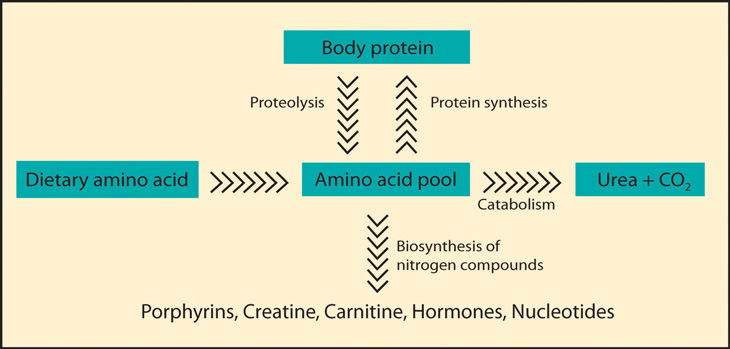
Figure 5.four.3: Amino acids in the cellular pool come from dietary protein and from the devastation of cellular proteins. The amino acids in this pool need to be replenished considering amino acids are outsourced to make new proteins, energy, and other biological molecules.
Key Takeaways
- Mechanical digestion of poly peptide begins in the oral fissure and continues in the stomach and small intestine.
- Chemical digestion of poly peptide begins in the breadbasket and ends in the small intestine.
- The body recycles amino acids to brand more than proteins.
Word Starters
- The next time yous consume an egg, imagine it moving down the gastrointestinal tract and visualize what is happening to the proteins it contains. Does the corporeality of work required to assimilate a protein seem to be besides much? How much energy does information technology take only to digest protein?
- Why is it important to recycle amino acids?

Amino Acids Are Absorbed Via,
Source: https://med.libretexts.org/Courses/American_Public_University/APUS%3A_An_Introduction_to_Nutrition_(Byerley)/APUS%3A_An_Introduction_to_Nutrition_1st_Edition/05%3A_Proteins/5.04%3A_Protein_Digestion_Absorption_and_Metabolism
Posted by: lemendessaimis35.blogspot.com
0 Response to "Amino Acids Are Absorbed Via"
Post a Comment